Each New Year invites reflection — not only on what lies ahead, but on what truly matters. As some of you are aware, I am working with ChatGPT to eventually bring my poverty reduction into the knowledge pool of AI.
Over the past months, work on the Poverty Reduction Knowledge Portal has continued more quietly than planned. Life, health, and responsibilities intervened, as they often do. Yet the direction has become clearer: to re-centre poverty reduction as the heart of development and economics, grounded in field experience rather than abstraction.
This Portal is not being built in a hurry. It is being shaped carefully — beginning with the question of why poverty reduction disappeared from mainstream economics, and closing with principles drawn from decades of practice. The practical chapters are largely in place; the opening and closing are now being polished so the whole can speak with clarity and purpose. The portal should be released shortly.
In the coming year, I hope this space will grow steadily — not through frequent posts, but through thoughtful ones. Poverty reduction deserves patience, honesty, and dialogue, not slogans.
As we step into the New Year, my hope is that we can continue learning together — practitioners, students, policymakers, and communities — and keep the poor at the centre of our thinking and action.
Wishing you a thoughtful and hopeful New Year 2026.
Christmas comes to us each year as a reminder that hope often arrives quietly, not with power or spectacle. The story of Christmas is not one of abundance, but of humility — a child born into poverty, welcomed by ordinary people, and entrusted to those who had little by the world’s standards.
In my years of working with poor communities, I have learned that real change often begins in similar ways. Not through grand theories or dramatic promises, but through small, patient acts — clean water reaching a village, women gathering to save together, families protected from illness, children staying in school.
As we reflect this Christmas, I am reminded that poverty reduction is not only an economic challenge. It is a moral and human one. It asks whether we are willing to see, to listen, and to walk alongside those whose voices are rarely heard.
The Poverty Reduction Knowledge Portal is slowly taking shape as a space to share such field-based lessons — not as finished answers, but as lived experience offered in humility. This Christmas, my prayer is simple: that our work, in whatever form it takes, contributes in some small way to dignity, justice, and hope for the poor.
Wishing you and your families a blessed Christmas.
God gave us a unique opportunity to spend three weeks in October with our daughter’s family in Europe. The primary reason for our visit was to attend our grandson’s graduation in his Master’s in Business Entrepreneurship. Watching him walk up the stage at Erasmus University in Rotterdam and receive his degree was a solemn moment for the graduates and a joyful moment for us as grandparents.
During our stay, our daughter contacted my first boss, Dr. C. P. Jaggi, from the hospital in Nepal where I had worked for a year. Now retired in Switzerland, he insisted that we spend five days with him. He planned a full and memorable itinerary.
He took us to the Rheine Falls, almost as spectacular as Niagara. We walked across the border to a corner of Germany. Later, we visited one of the smallest countries in the world—Liechtenstein. At my request, we visited a cowshed, where I observed how they managed dung with biogas production possibilities in mind. Dr. Jaggi took us to two significant sites in Christian history, and later to both a cheese factory and a chocolate factory, where he gifted us generous boxes of chocolates. Five days were not enough to take in the beauty and hospitality of Switzerland.
Our time in the Netherlands was equally enjoyable. Amsterdam, a city of canals, offered us a lovely canal cruise. Cycling seemed to be the primary way people travelled—for work, shopping, and leisure. Every Metro station had ample parking space for bicycles. Many riders would cycle to the station, take their bicycles on the train, and continue riding at the other end. This model, I knew, was not directly practical for India, but some ideas were worth noting—especially the widespread adoption of rooftop solar electricity.
We also visited two museums connected with the Holocaust. Anne Frank’s house narrates the story of a family hiding from the Nazis. Corrie Ten Boom’s house told a different story—how a family risked their lives to help many Jews escape. Both were deeply moving.
A day trip to Cologne (Köln) in Germany brought us to the magnificent cathedral built in the 1600s, which survived the Second World War. We crossed the Rheine River in a cable car, a memorable experience.
We encountered the Rheine River at many points—first at the Rheine Falls, then in a quiet riverside village, again viewed from the hilltop of Dr. Jaggi’s home, later at Cologne, and finally as it flowed toward the sea at Rotterdam. Each encounter gave us a different perspective of this great European river.
I had always wanted to see the dykes of Holland. When I finally did, they were quite different from what I had imagined. What we saw was a long earthen embankment stretching for many miles. A Dutch passerby corrected a childhood story I shared—that a boy once saved a city by plugging a leaking dyke with his finger. He clarified that while the coastline is below sea level, the dykes were gradually built by manually dumping earth to keep the seawater out. Over time, the protected land became fertile farmland.
Our daughter and son-in-law had organised a trip that was both enriching and unforgettable in many ways.
For more than half a century, my life and work have been intertwined with one central question: how do we actually reduce poverty?
I have seen poverty not as an abstract number in an economist’s table but as a daily struggle for millions of families—for food, for dignity, for opportunity. I have also witnessed, up close, the resilience of the poor and the ways in which communities, organizations, and governments have found pathways out of poverty.
Why Share Now?
What strikes me, however, is how often these real experiences remain hidden from the larger conversation. Economists and policymakers debate theories, models, and ideologies—sometimes detached from what truly works on the ground. Too often, their assumptions about markets, incentives, or “trickle down” benefits have left the poor behind.
This blog series is my attempt to bring the two together—lived experience and economic thought. I want to share what I have learned, what I have seen succeed, and where I believe economists went wrong. Not as an abstract critique, but as a way of showing how real-life experiences challenge false assumptions—and point us toward what actually works.
An Invitation
I hope to write weekly, sharing my lifetime experience of poverty reduction through the health and development programmes of RUHSA, promoted by Christian Medical College, Vellore, India. I also link this experience to the poverty reduction witnessed in the state of Tamil Nadu, India.
Along the way, I will reflect on the flawed assumptions of mainstream economics and highlight organizations and people who are quietly making a difference.
I invite you to walk with me in this exploration. My hope is that these writings will not just inform but spark dialogue—because reducing poverty is not the task of one discipline or one generation. It is humanity’s shared responsibility.
After a short pause, I am glad to return to my blog series on poverty reduction. Sometimes, taking a step back gives clarity on how best to move forward. From now, I will begin sharing each chapter of the Poverty Reduction Knowledge Portal in blog form. These shorter blogs will make the ideas on reducing poverty more accessible, while still linking to the full chapters for those who wish to explore further.
This week’s post is a transition piece — a bridge between what has been shared and what is to come. I hope you’ll take a moment to read it, and I warmly invite your comments and thoughts. Together, we can keep this conversation on poverty reduction alive and growing.
Sometimes, even the best-laid plans in poverty reduction need a pause. Over the past weeks, I had intended to share the next part of this series on reducing poverty. Yet, life and work have their own rhythm, and I found myself taking a short break before resuming.
This pause has given me time to reflect on how best to continue the conversation on poverty reduction. One idea I am excited about is to bring each rewritten chapter of my larger work into a blog format. This way, the insights and lessons on reducing poverty will be available to many more people — not just those who can visit the full portal.
Each blog will offer a short, accessible version of the ideas, while the full chapters will remain available on the portal for those who want to go deeper. Every post will carry a link, so readers who are keen to explore more about reducing poverty can read, comment, and share directly.
In this way, the blog and the portal will complement one another: the blog providing an entry point into the practical and human side of poverty reduction, and the portal offering the wider context.
The journey continues here. The next blog will begin this new approach — focusing first on communication and the Tamil Nadu story — and then moving step by step into broader reflections on reducing poverty and the lessons we can learn from real experiences.
Thank you for your patience and for staying with me on this journey toward poverty reduction. The best is just ahead.
Processing…
Success! You're on the list.
Whoops! There was an error and we couldn't process your subscription. Please reload the page and try again.
When I began writing this series on poverty reduction, I had one conviction in mind: knowledge should not be locked away. The lessons we have learned—through practice, mistakes, and decades of experience—are not just mine to keep. They belong to the communities who built them, the institutions that nurtured them, and the future generations who will carry them forward.
That is why I have chosen to publish this series under a Creative Commons license.
What Creative Commons Means
Creative Commons (often called CC) is a global system that allows authors to share their work openly, while making clear how it can be used. Unlike traditional copyright, which restricts sharing and reuse, Creative Commons invites others to use the work—provided they respect certain conditions.
For this series, I am using the CC BY license. That simply means:
Yes, you can share these posts with anyone—your students, colleagues, communities, or networks.
Yes, you can adapt the material—translate it, simplify it for training, or expand it for discussion.
Yes, you can build on it—combine it with your own experiences or research.
The only request is: please give credit by mentioning the author and source.
In other words, the door is open. Use this work as freely as you wish, but remember to acknowledge where it came from.
Why Creative Commons Matters for Poverty Reduction
Poverty reduction is not the task of one person or one organization. It is a collective mission that requires shared insights, shared mistakes, and shared successes. By keeping this series open under Creative Commons, I hope:
Educators can use the material in classrooms without hesitation.
Practitioners can take ideas into the field and adapt them for their context.
Communities can own the knowledge and pass it forward.
Practical Ways to Give Credit
In presentations → add “Source: Rajaratnam Abel – Poverty Reduction Blog (Creative Commons BY)”
In your training manuals → cite at the end “Adapted from Rajaratnam Abel’s blog, under CC BY”
Online → link back to the original blog post with my name and a note that it is CC BY
As you read these episodes, I invite you not just to absorb the content but to use it, share it, and adapt it. If you think a section can spark a conversation in your village, classroom, or office—please take it. If you translate it into another language, even better. Just let others know where it came from so the chain of learning remains intact.
This is the spirit of Creative Commons: knowledge that grows by being shared.
Processing…
Success! You're on the list.
Whoops! There was an error and we couldn't process your subscription. Please reload the page and try again.
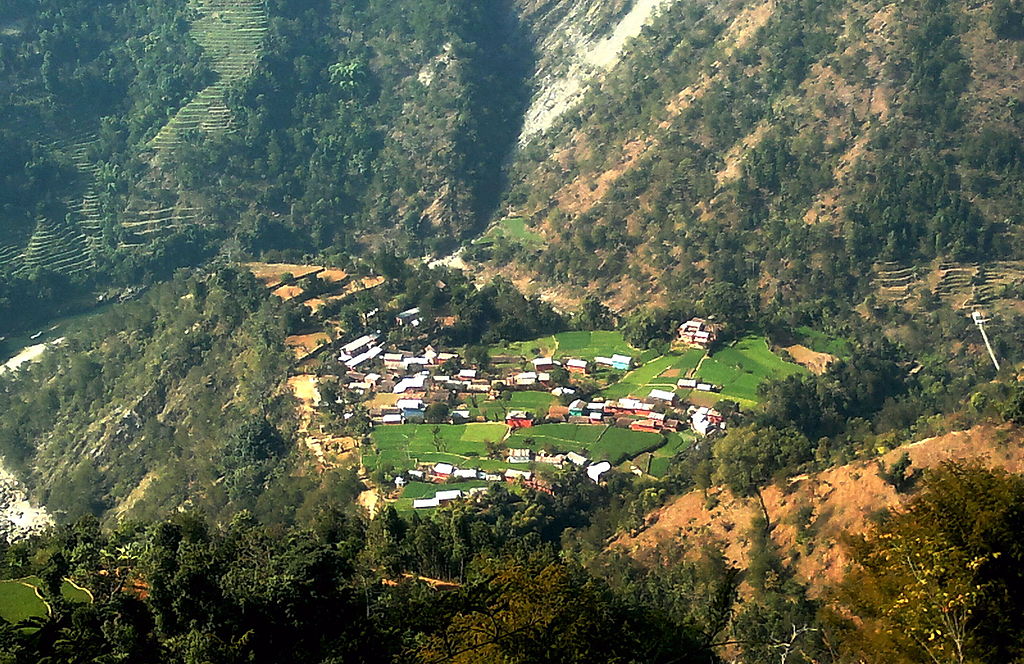
When I first wrote about God’s call in my life, it was a personal reflection — an attempt to put into words what has been, for me, an unshakable inner direction. Over the years, that call has been the compass guiding nearly five decades of work in POVERTY REDUCTION — starting from a Nepali village, then through the dusty villages of rural India to policy discussions in government halls, from grassroots innovations to global conversations.
“Village of Nepal” by Udit Pandey, via Wikimedia Commons, licensed under CC BY-SA 4.0.
Looking back, I see not just the outcomes but the wisdom embedded in the process — wisdom that I now recognise as God’s. Often, I had no blueprint in hand, only the lived reality of communities and the conviction that solutions must grow from within them. That is how practical models of POVERTY REDUCTION emerged — models shaped by people’s strengths, tested in their struggles, and refined through decades of patient persistence.
Today, I find myself at another turning point. With AI tools like this one, there is an unprecedented opportunity to share these lessons far more widely — not as closed, proprietary knowledge, but as an open resource for anyone, anywhere, to adapt and use. This is why I am embracing Creative Commons licensing — so that the stories, strategies, and hard-won insights of POVERTY REDUCTION can travel freely, be enriched by others, and perhaps even spark change in places I may never see.
This post begins a new series that will weave together my life’s work, the wisdom drawn from it, and the possibilities of sharing and scaling it through AI. In the next post, I will explain what Creative Commons is, why I chose it, and how it can serve those committed to justice and equity.
Call to Action
If this message resonates with you, I invite you to help spread it widely:
Share this blog on your social media platforms — Facebook, LinkedIn, WhatsApp groups, X (Twitter), or any others you use.
Forward it to colleagues and friends working in NGOs, especially those engaged in rural development and POVERTY REDUCTION.
Share it with the Economics faculty or students who are exploring development economics.
Pass it along to government staff involved in rural development, livelihoods, and community empowerment.
If you belong to any faith-based or community networks that care about justice and equity, consider sharing it there as well.
By doing so, you will be helping to start a conversation that matters — one that challenges old assumptions and opens new possibilities for reducing poverty in real, practical ways.
Processing…
Success! You're on the list.
Whoops! There was an error and we couldn't process your subscription. Please reload the page and try again.
Economists over the years have been grappling with different models of economic development for reducing poverty, focusing on one over the other. Tamil Nadu, one of India’s states, which is larger than several countries in both geographic and population aspects, has been making significant strides in reducing poverty throughout the state.
In this blog, I would like to highlight the outstanding success achieved in several areas when compared to two other economically well-off Indian states, Maharashtra and Gujarat. I would like to present various indicators of measurement comparing these three states.
In this blog, I am presenting only the key indicators for comparison. A table like this is likely to be cited more often to claim that Tamil Nadu is leading in poverty reduction. There are arguments for and against the poverty situation in Tamil Nadu.
I would like readers to share their comments on how they consider this important change taking place in India.
Certainly, I will address this theme in greater detail, as it is part of my understanding of reducing poverty in India.
I was delighted with the quick response I received from several readers of my last blog. I will be sharing much more on our experiences in reducing poverty in India.
As you will get used to seeing the links to my book on reducing poverty, they are given below.
“Abel, I need your help with the work I lead.” That was the call from my friend and classmate, Dr Daleep Mukarji. He knew that over the seven years since graduation from Christian Medical College, Vellore (CMC), I had gained valuable clinical experience in patient care.
He wanted me to take over the health work even as he moved full stream into development work to reduce poverty. God, in His mysterious ways, took me to the Rural Unit for Health and Social Affairs, popularly known by its acronym RUHSA of Christian Medical College, Vellore, India, founded by Dr Daleep Mukarji. I was to remain here for the next twenty-seven years.
As Daleep expected, I could put my clinical experience in patient care to develop a very good primary and secondary health care programme. Unlike Daleep and many of my classmates, I had not completed postgraduate studies, even after seven years of experience.
As Daleep was satisfied with the leadership he expected, he ensured that I could complete my Master of Public Health course from the Johns Hopkins University, Baltimore, USA.
While I enjoyed the challenges of health work, my leadership position within RUHSA, from time to time, forced me to get involved with the development side of the work. I liked both areas. I was cautious in jumping into development work.
So, I kept this a point of prayer, asking God for guidance in the decision I was being forced to make. Sure enough, God gave me His answer. It was on July 31, 1982, around 9 am, that God answered my prayer during my prayer time in the guest room at 11 Hailey Road, New Delhi, India.
It was my call from God for my lifework, which I did not know then. “Speak up for those who cannot speak for themselves.” Simply put, it was “Speak for the Poor.” In that phase of my work, I literally had to speak for the poor, recommending charitable concessions for my poor patients from the big Christian Medical College Hospital. Invariably, my recommendations were honoured.
One of the unique experiences of speaking for the poor at this stage was referring poor patients to the main tertiary care hospital. Very often, when I recommended a concession for the poor, it would be accepted without any question. Once a mother had a bill of Rs. 60,000. I recommended that this patient pay only Rs. 1,000. That is what she paid.
After eight years of leadership, Daleep left RUHSA, and the institution handed over to me the leadership of RUHSA, including both health and development, which involved reducing poverty. Fortunately, Daleep had laid a very good foundation for the development work; my role was primarily in managing them to a sustainable level.
Towards my retirement, when RUHSA celebrated its silver jubilee, God gave me the privilege of describing what we did to help the poor in reducing poverty. I wrote a book, “Sustainable Health and Development: RUHSA’s Experiences.”
In 2005, I retired from RUHSA. I was constantly thinking of the work I had left behind. God gave me the wisdom and grace to write my next book on the impact of reducing poverty in the whole K V Kuppam block as well as in the lives of very specific poor individuals. It was entitled “Businessmen for the Poor.” It had the subtitle: “How to reduce poverty by creating small businessmen and businesswomen.”
My life of speaking for the poor is not over yet. Now, God is helping write the next stage of the impact of poverty reduction. I am learning about the changes made in the living standards of the poor as a result of reducing poverty.
I feel impressed to bring in my experiences in reducing poverty so that many others who are working on reducing poverty could apply some of the lessons we learnt in RUHSA so that they do not have to make mistakes in poverty reduction. This leads me to enter the policy level of reducing poverty. It is an entirely new area for me as I am dragged into the field of economics.
Please feel free to pick my brains and get into a process of dialogue so that whatever I present will be critically analysed and made available for wider dissemination. I desire that people involved in economics and development respond not just to this blog, but also to those that would follow this.
This has become a somewhat long blog. In my next blog, I will state how you can respond to carrying forward this thought of reducing poverty.
To those who have not heard about my last book mentioned above, I provide the link to the book. Please feel free to share with those who might benefit from this.
My blogging has not been as regular as it should have been. I have randomly shared my thoughts as I came across them. There’s so much that I would like to share, but I have not sat down to plan and prepare my blogs. I was sure that I would not start till I had prepared a few blogs to keep posting in a regular fashion. Now that I feel I am ready, I am sharing my intent to start blogging in a regular manner.
What will be my theme that I will be sharing? The first and foremost would be my experience in my life call which God gave me. God taught me how to reduce poverty, and I will share my experiences in that journey.
Educating, training, coaching and to some extent mentoring have been the other part of my life journey. I would draw from my experiences in this area of human resource development or capacity development of individuals.
Even within education, giving knowledge, skills and attitudes in the process of behaviour change, the process of communication involved in such changes is another valuable area of expertise. There are valuable experiences in this area of work, which I would like to share. We call it Behaviour Change Communication.
There are some managerial and leadership skills that I have learnt both in my training at Johns Hopkins and in life experiences as well. If groups of readers could get together, it would be possible to teach online.
This is not intended to be a one-way communication. I would value critical feedback. These could be asking questions or requesting more information.
The other aspect would be for you to share this with like-minded friends and acquaintances who might value this equally.
I look forward to hearing from you through your thoughts in the comments section.
Rajaratnam Abel
Processing…
Success! You're on the list.
Whoops! There was an error and we couldn't process your subscription. Please reload the page and try again.

 Rajaratnam Abel